SiliconPhysical identity
SystemsBoot, lifecycle & access
DataSigning & provenance

01OEM / ODM · Network & embedded devices

Bring a root of trust to your product.

Add an independent security IC to an existing design, or integrate Dynamic PUF IP into your next SoC. Separate root keys let boot, maintenance, OEM and application domains evolve independently.

Existing board

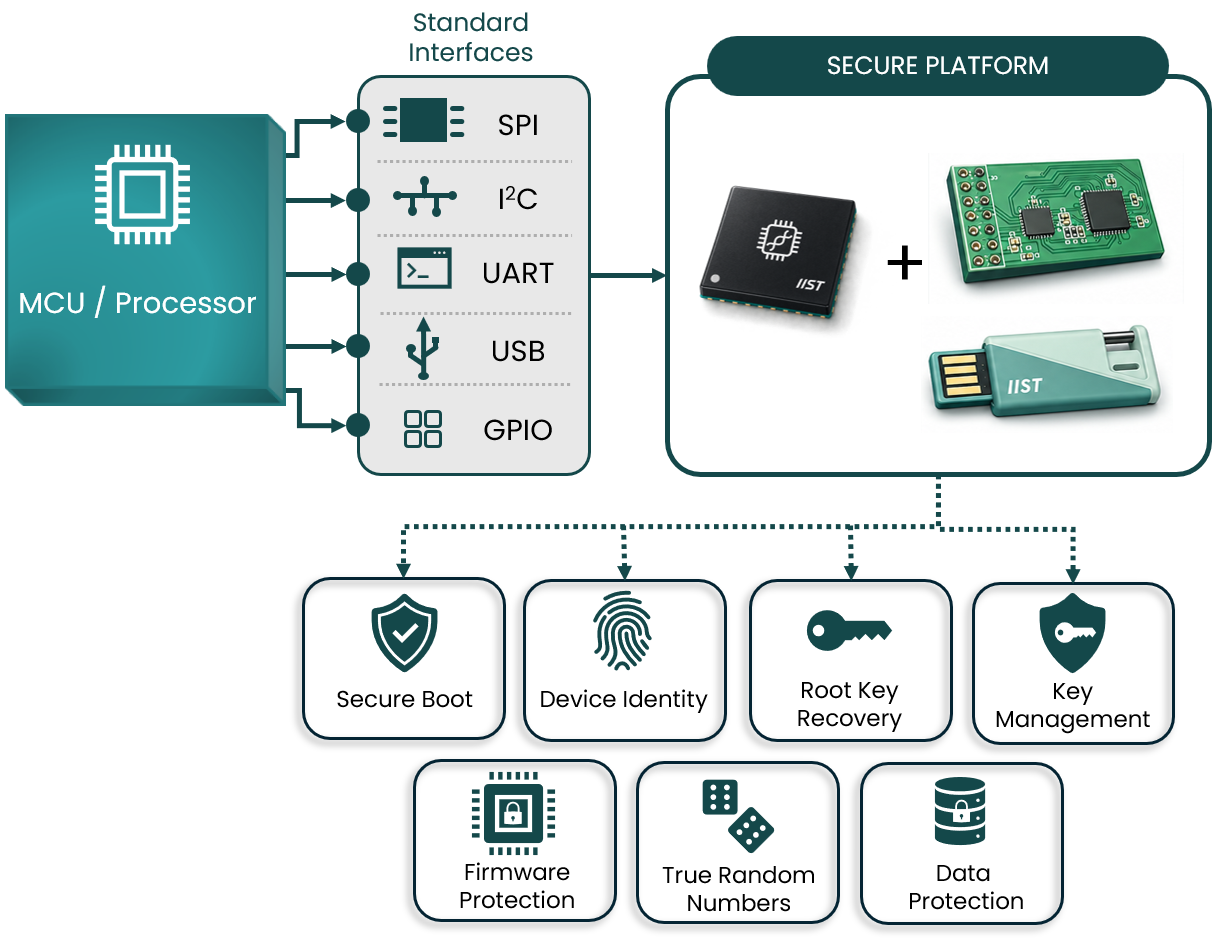
Evaluate a SASE secure IC or module, then define host interfaces, provisioning and firmware integration.


Custom silicon

Select Dynamic PUF IP or SASP blocks for your MCU, SoC or chiplet architecture.

PQC and zero trust

Plan algorithms and migration separately from device identity; define which users and devices may invoke trusted operations.

Bring your processor, OS, available interfaces, target volume and the functions you need to protect.

Discuss my integration

02Critical projects · Industry · Drones & UAV

Protect the device throughout its lifecycle.

Use hardware identity and isolated key domains as foundations for authenticated devices, signed firmware and controlled maintenance. For drones and UAV, start by mapping trust between the vehicle, payload, operator and ground system.

Boot and updates

Define how firmware is authenticated and how signing authority changes over the service life.

Device relationships

Evaluate authentication and key establishment between field equipment and the systems that manage it.

Operations and ownership

Separate operator, maintenance and application credentials. Define provisioning, handover and zeroization.

Bring your system roles, connectivity, update flow, environmental constraints and qualification targets. Drone/UAV use cases require project-specific integration and validation.

Scope my security project

03Software · Cloud · AI platforms

Give your service a physical trust anchor.

Connect software identity and signing workflows to a secure device. IIST USB keys and modules provide a hardware foundation for access, enrollment and trusted-data applications, with host firmware and SDK integration as part of the architecture discussion.

Identity and access

Evaluate a USB security key for FIDO2 access or a module for device enrollment and authentication.

Signing and provenance

Explore hardware-backed signing for C2PA and data-origin workflows. Signed provenance records origin and integrity; it does not establish factual accuracy.

Service integration

Define where credentials live, which operations the host requests, and how your service verifies the result.

Bring your platform or SDK, identity/signing workflow, deployment environment and pilot size.

Discuss a hardware partnership

Deployment architectures

Four ways to anchor
trust in hardware.

Integrate directly into silicon or add an independent security device to an existing platform.
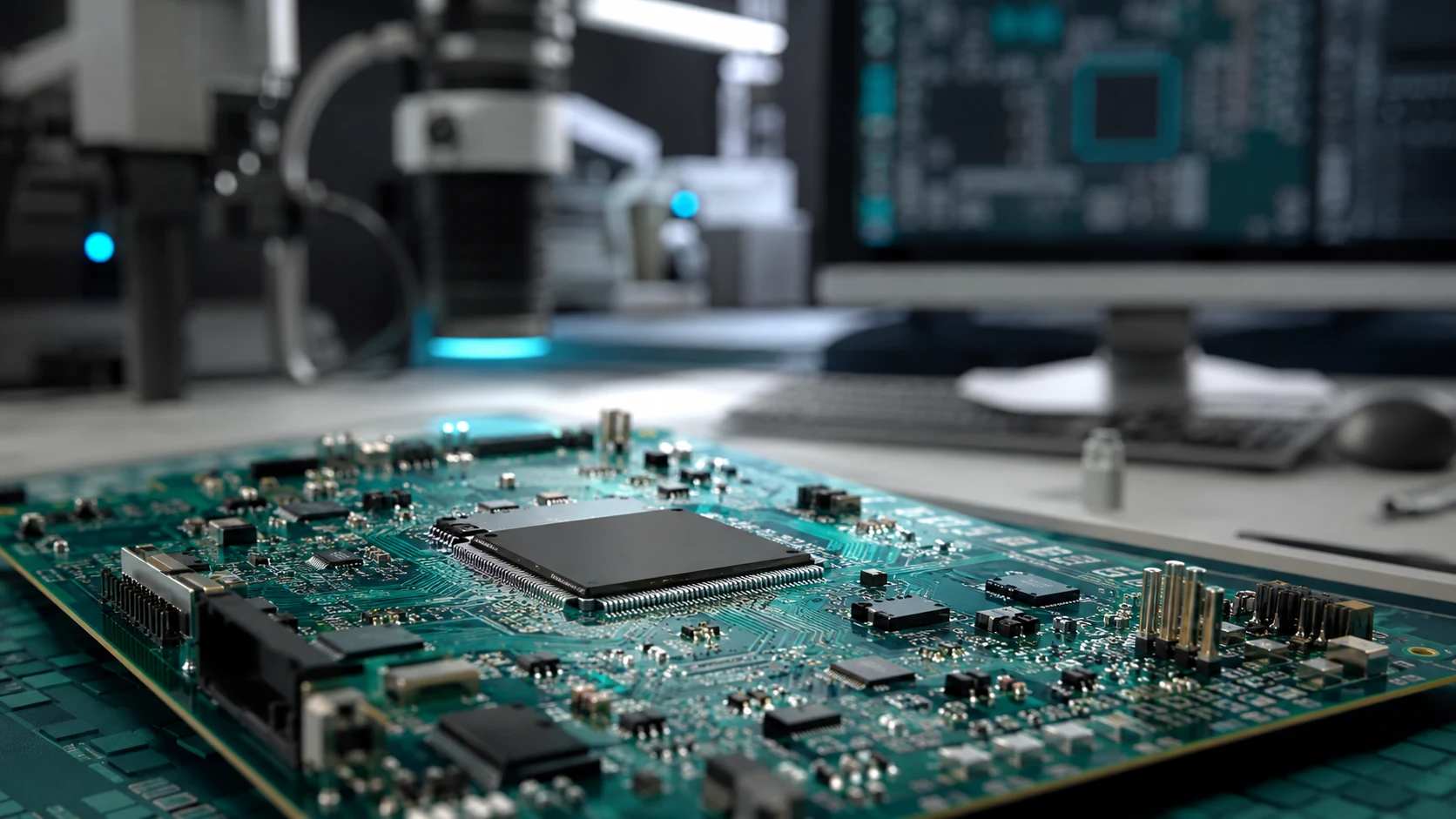
Illustrative deployment context for SoC & secure MCU

SoC & secure MCU

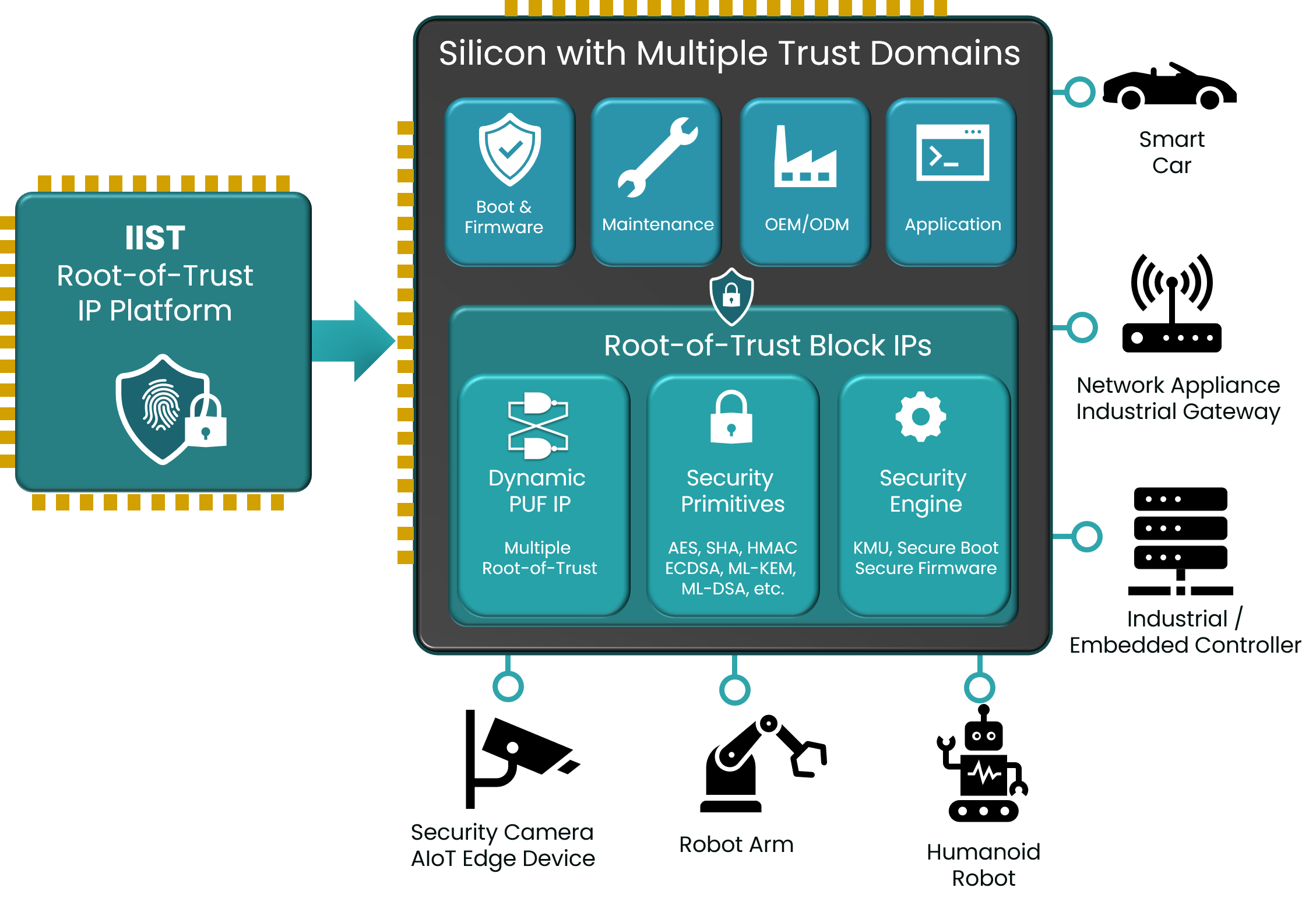
A lightweight root-of-trust IP inside custom silicon.

Dynamic PUF provides device identity, root-key recovery, and true-random entropy while separate trust domains isolate boot, firmware, maintenance, OEM, and applications.
  • Native hardware identity
  • Secure boot and update
  • Long-lifecycle crypto agility
Illustrative deployment context for Chiplet authentication

Chiplet authentication

Trust across dies, packages, and ownership boundaries.

Chiplets authenticate one another and establish hardware-rooted relationships, with independent roots for OEM, integrator, and application domains.
  • Mutual authentication
  • Hardware-rooted relationships
  • Supply-chain and IP protection
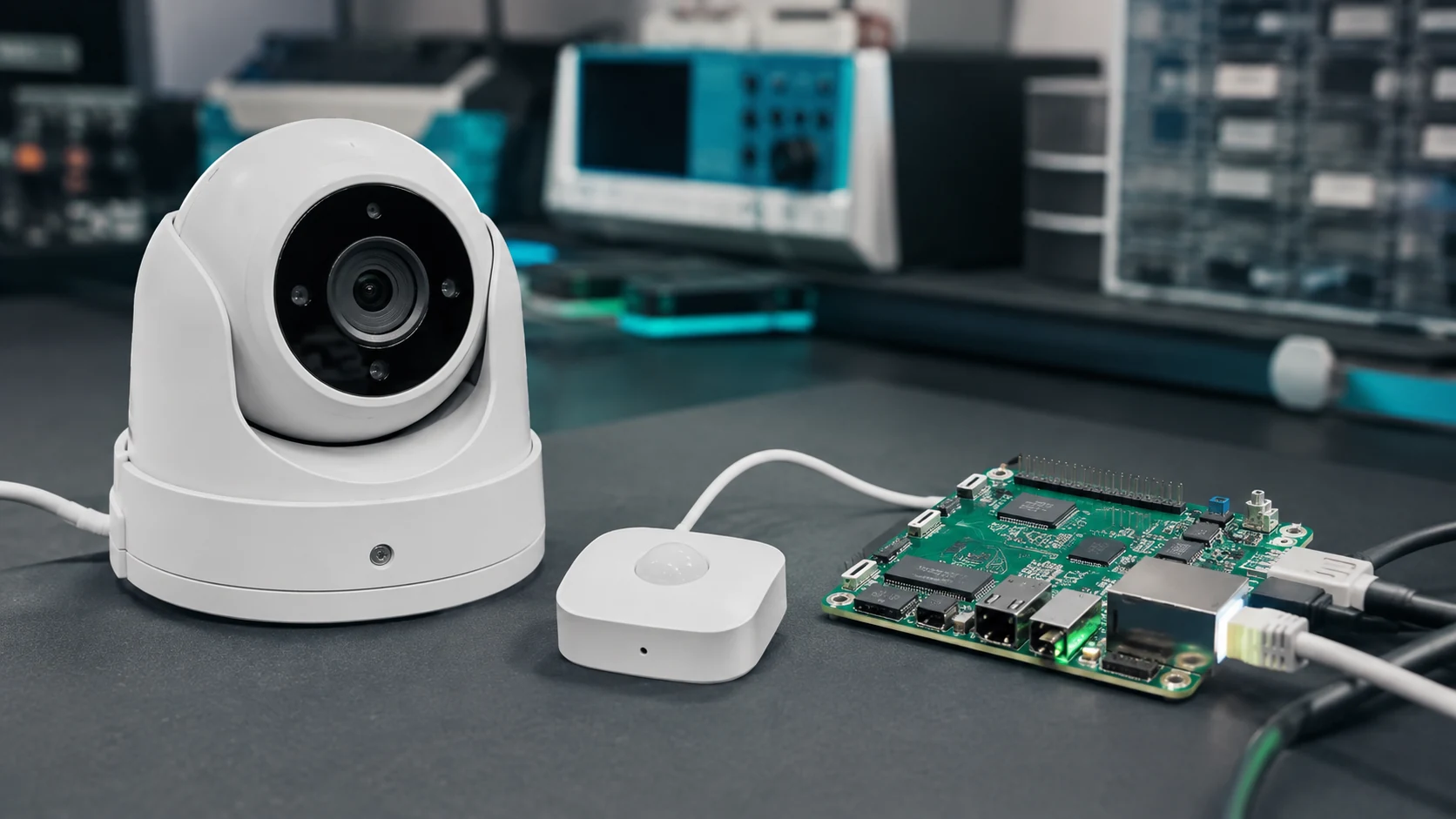
Illustrative deployment context for Embedded system security

Embedded system security

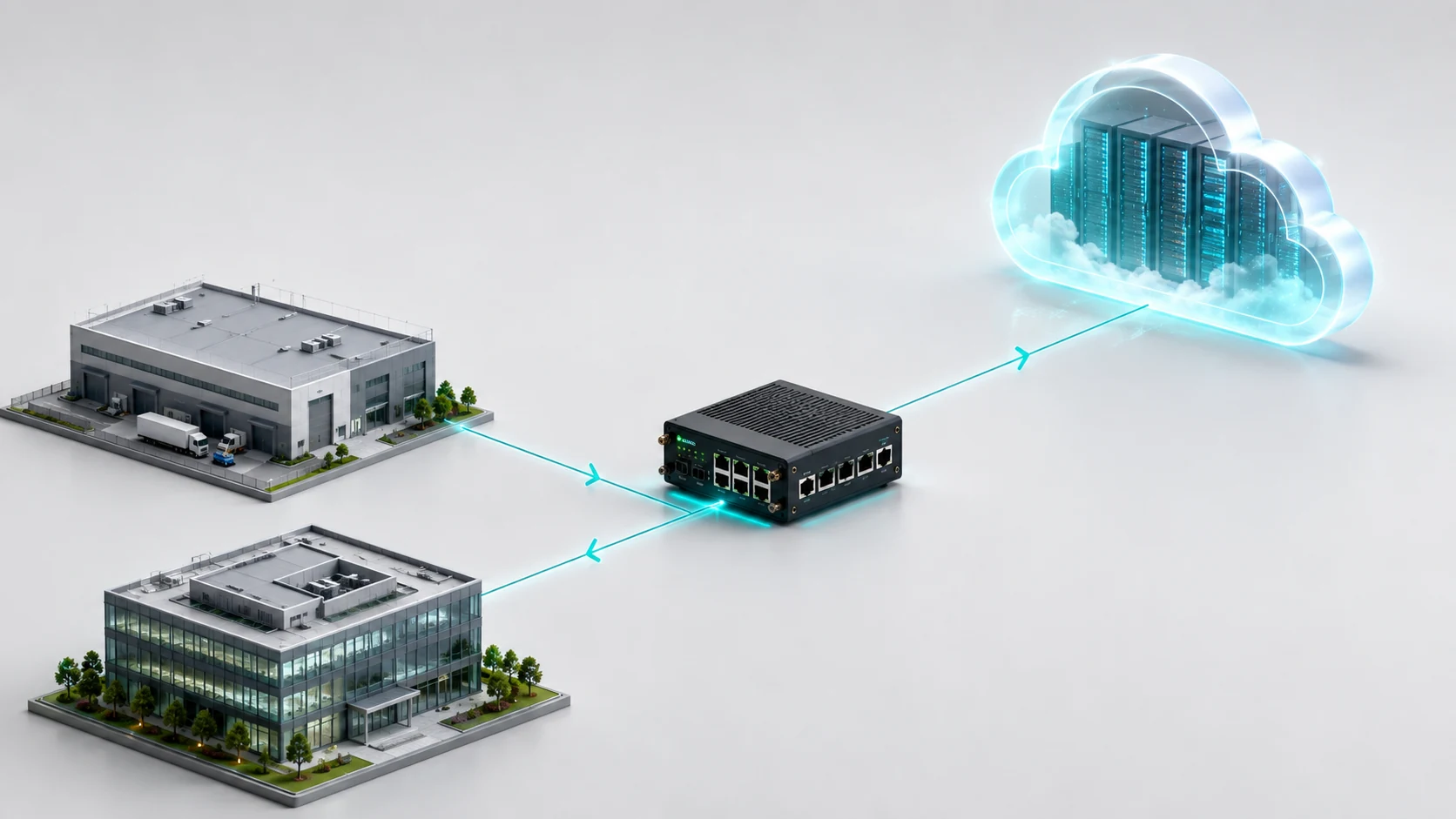
Add a trusted anchor without redesigning the host processor.

Secure ICs and modules deliver identity, entropy, signing, encryption, and authentication through standard interfaces while remaining independent from the host.

  • Legacy-system retrofit
  • Secure IoT acceleration
  • Independent security boundary
Illustrative deployment context for IT, OT & zero trust

IT, OT & zero trust

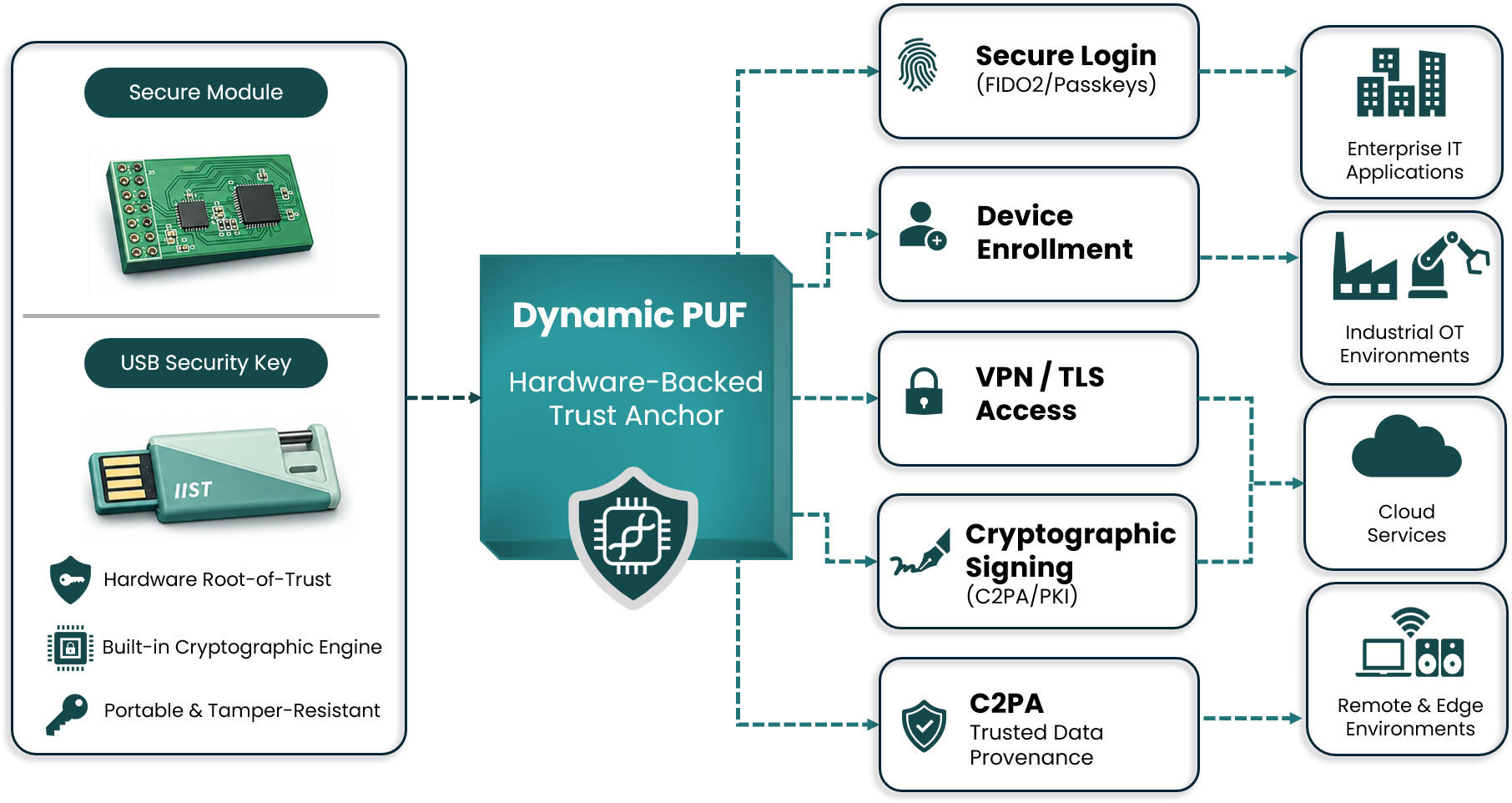
Portable hardware-backed trust outside the host.

USB security keys and secure modules enable passwordless access, device enrollment, VPN login, trusted signing, and data-provenance workflows.

  • FIDO2 authentication
  • Enterprise and industrial access
  • Hardware-backed signing workflows

Architecture expertise

More than a security block.

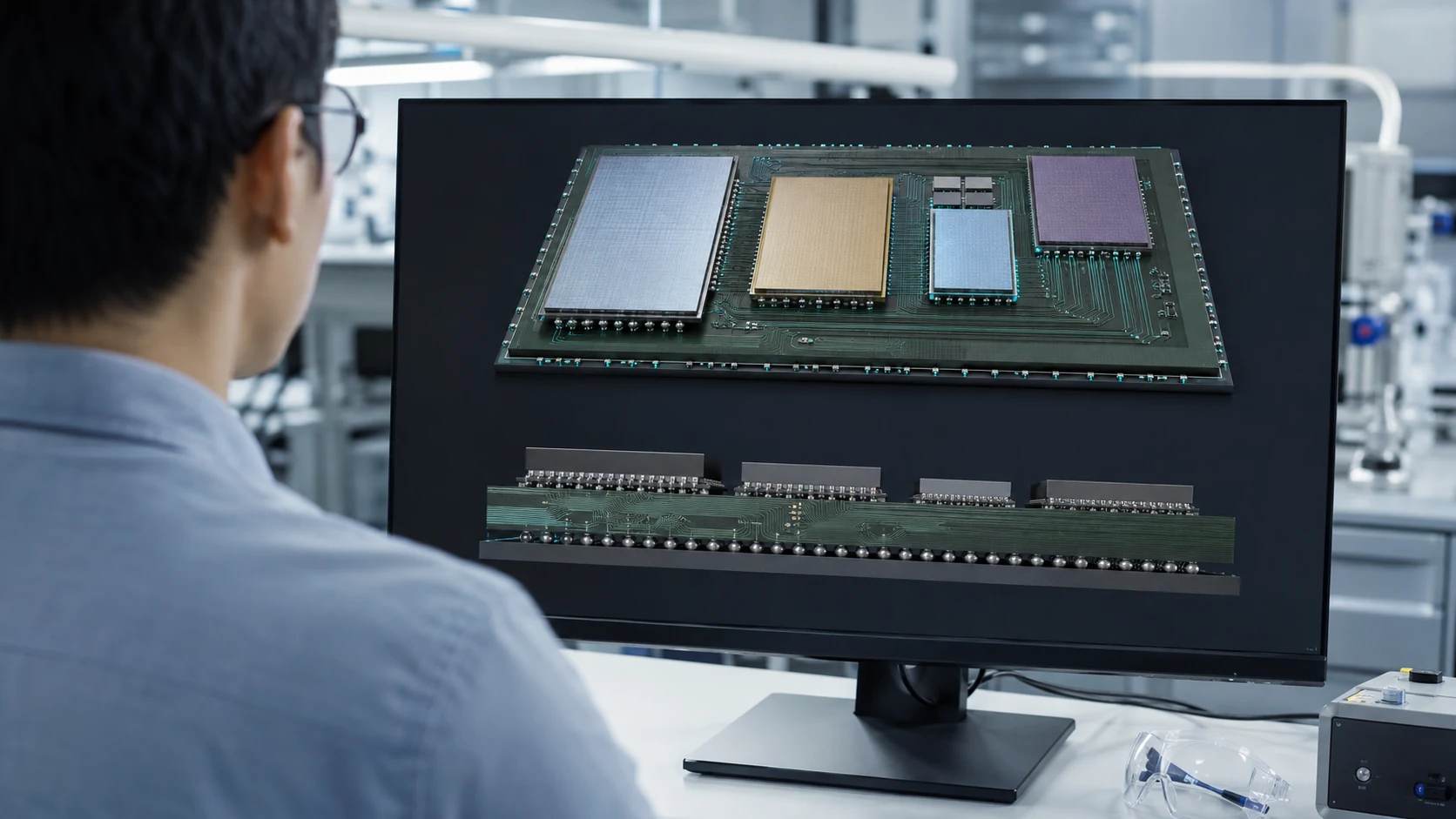
IIST helps teams define how hardware trust is provisioned, used, updated, and verified across the complete device lifecycle.
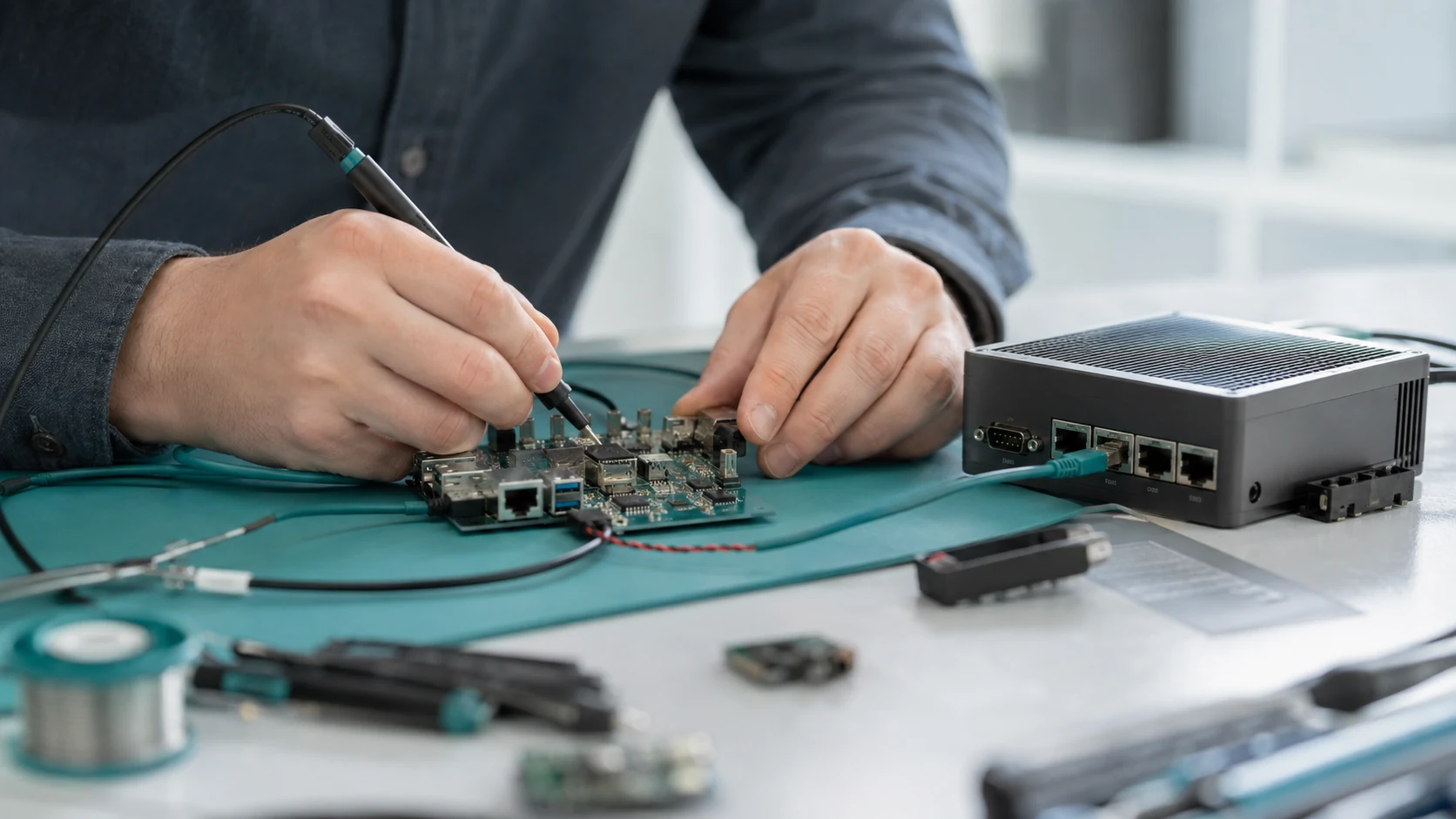
Illustrative electronics experts reviewing a prototype and discussing its security architecture

Root-of-trust architecture

  • Trust-domain definition
  • Key hierarchy and provisioning
  • ASIC, SoC, MCU, module, and FPGA integration
  • Host firmware and SDK integration
  • Ownership and lifecycle management

Identity & trusted operations

  • Hardware-backed device identity
  • Device attestation
  • FIDO2 secure access
  • Secure communication and key establishment
  • C2PA and trusted-data provenance

Crypto agility & PQC

  • Cryptographic inventory and migration planning
  • Hybrid classical and post-quantum deployment
  • ML-KEM and ML-DSA integration
  • Firmware and software signing
  • Post-quantum TLS, VPN, and authentication

Compliance preparation

  • CRA and cybersecurity requirement mapping
  • Technical controls relevant to NIS2
  • Secure boot and update architecture
  • SESIP and FIDO2 technical preparation
  • FIPS and CAVP-oriented planning

Start a conversation

Map hardware-rooted trust to your use case.

Tell us what you are securing. We will map the right path from evaluation hardware to customized silicon IP.